

Plan the breakfast around the meeting, not the other way around
A good group order starts with a clear serving plan. A twenty-person presentation, a morning training session with two arrival times and an open house with visitors moving through the room are different purchasing situations. The same headcount can produce three different quantities because people have different opportunities to eat. Tell us whether food will be set out once, replenished during a break or kept for a second group. That detail is more useful than asking for enough bagels for an unspecified crowd.
For a Wayne workplace breakfast, choose one person to own the request. That person gathers the headcount, requested date, budget expectations and any product questions, then receives the proposed order details. Other colleagues can contribute preferences, but one final decision avoids conflicting instructions. If the event has a fixed start, share the actual time food must be ready to serve. A requested event time helps the conversation; it does not establish a delivery appointment or guarantee an arrival window.
Decide whether this is a meal, a meeting extra or a recurring supply
Bagels may be the main breakfast, one option beside fruit and other food, or a light snack during a longer session. Make that distinction before choosing a quantity. If a separate caterer is providing a substantial meal, the full attendee list may overstate the bagel requirement. If participants will arrive without breakfast and work through the morning, an order based only on a small tasting portion could disappoint. We can discuss your plan more effectively when we know what else is being served.
A recurring office order also needs a different conversation from a one-time event. For an occasional meeting, the focus is the guest list and date. For a repeated breakfast, tell us the expected frequency and how much the headcount changes. Wholesale enquiries should identify whether the bagels will be resold, used in a prepared menu or served to staff or guests. That gives the quote the right context without assuming every group order qualifies for the same commercial terms.
Use a quantity worksheet with assumptions you can explain
There is no universal bagel count for every meeting. A useful estimate records three inputs: the number of people likely to eat, the planned quantity per person and a deliberate allowance for uncertainty. Keep those assumptions visible so a colleague can review them. Count confirmed participants separately from possible visitors. If the uncertain group is large, make a second estimate rather than hiding a substantial contingency inside the first number. This makes the purchasing decision easier to revise when attendance becomes clearer.
For a hypothetical planning example, suppose forty people are expected and thirty are likely to choose bagels because another breakfast option is available. Planning one bagel for each of those thirty people produces thirty bagels before any contingency. If the organizer independently chooses an additional ten percent allowance, that is three extra, making thirty-three. These numbers illustrate arithmetic only. They do not describe our pack sizes, minimum purchase, recommended appetite allowance or a product currently available in a particular quantity.
For a larger hypothetical event, eighty confirmed guests and twenty uncertain guests can be shown as two lines. At an organizer-selected one bagel per person, the base case is eighty and the full-attendance case is one hundred. The organizer can then decide which case fits the event and budget. Sharing both cases with your enquiry makes the uncertainty explicit. It is better than requesting an oversized order and discovering afterward that the additional quantity was based on a guess.
Turn the estimate into a brief your colleague can approve
A short written brief can make approval straightforward: event purpose, confirmed attendance, expected bagel eaters, other food, requested products, serving windows and the person responsible for receiving. Add your proposed quantity and explain any contingency in a sentence. If you are comparing options, ask for the same product and quantity information in each proposal. A lower headline figure is difficult to evaluate when it leaves out preparation, packaging or a charge included in another quote.
For an internal meeting, share the brief with the budget holder before finalizing the request. For a public or ticketed event, check that the person approving the food understands the attendance assumptions. If registration increases, update the count and ask whether the proposed order can change rather than silently expecting extra food. Keeping one current brief avoids a chain of forwarded messages in which different people approve different numbers. It also gives your receiving contact a simple checklist to use when checking the confirmed order.
Separate multiple serving windows in the request
A meeting with staggered attendance should have a count for each group. For example, an organizer might expect twenty-four people at the first session and sixteen at the second. Treat those as separate planning lines even if a single person purchases everything. Explain whether the two groups share the same room, whether food can be stored between sessions and who will set out the second portion. Those arrangements affect your handling and preparation plan even when the product request is otherwise identical.
Wayne has a commuter setting as well as workplaces and residential neighborhoods. NJ TRANSIT identifies the Wayne–Route 23 Transit Center as a station on the Montclair–Boonton line. If your group is arriving at different times, ask participants for the attendance window relevant to your event rather than inferring it from a timetable. OnlineBagel does not operate a station sales point or establish a pickup location through this page. The practical point is to size your own breakfast around the people actually attending.
Give the quote a useful product brief
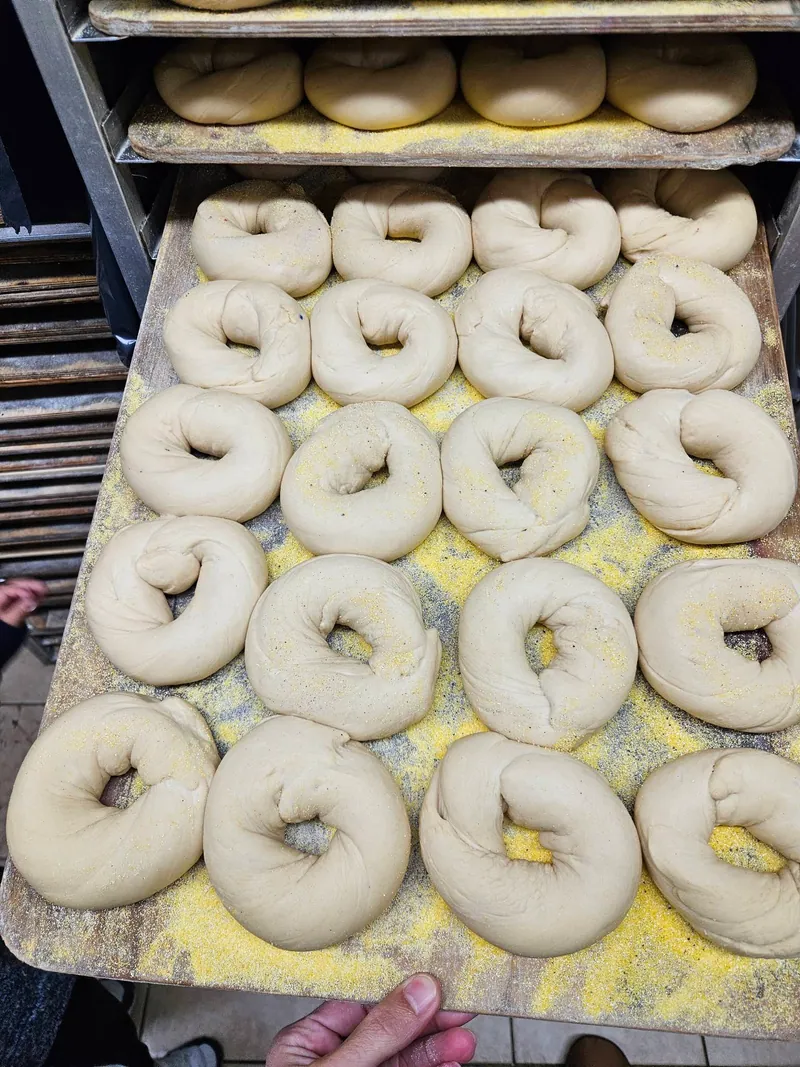
You do not need to invent a finished assortment before contacting us. Describe what the order is for, which preferences matter and where you are flexible. If you have particular variety requests, list them as requests so we can discuss the confirmed options. If the group would prefer a simpler assortment, say that too. Availability, the final mix and any requested preparation need to be agreed in the order discussion. A photograph is a helpful introduction to the product, not a live stock list.
Keep bagels, spreads and serving supplies separate in your notes. Ask whether the additional items you need can be included rather than assuming that a group order automatically arrives with cream cheese, butter, knives, napkins or platters. Likewise, identify any slicing or individual packaging request. Some buyers prefer a shared serving table; others need portions distributed across rooms. Explaining the intended use lets us confirm what is possible and keeps an unrequested extra from becoming a last-minute problem.
Handle ingredient questions before the guest list is final
If a participant needs ingredient or allergen information, make that question part of the enquiry early. State the information needed without sending anyone’s private medical history. Ask about the specific product being considered and any relevant handling information. A preference for one variety is different from a medical need to avoid an ingredient. Do not use the appearance of a bagel, the absence of a visible topping or a photo caption as evidence that a product is suitable for a particular dietary requirement.
Your organizer should communicate the confirmed information accurately to guests and avoid making a broader promise than the information supports. If an attendee needs a level of ingredient or cross-contact assurance that has not been established, arrange a suitable alternative rather than treating the group order as a guarantee. Keeping that decision separate from the ordinary quantity calculation makes the request clearer. We can discuss product questions without collecting personal health records through a public order form.
A clear receiving plan matters as much as the count
Provide the destination city and ZIP at the enquiry stage, plus any practical receiving constraints. A large office building may have a front desk, restricted access or a receiving policy that differs from the meeting room’s location. Tell us who can receive the order and whether your organization requires a particular purchasing process. Do not send door codes, payment card numbers or security credentials in the message. Detailed arrangements can be discussed through the appropriate order conversation once the request has been reviewed.
For households in Wayne, the same principle is simpler: give us the requested date and destination ZIP, then discuss the available shipping arrangement. Nationwide shipping is part of OnlineBagel’s offer, but this page does not create a local delivery route or walk-in collection point. If your event depends on food being ready at a particular hour, raise that requirement before agreeing to an order. The fulfilment method, timing and any limitations should be understood before you build the rest of the event around them.
Planning a campus-area or organization event
William Paterson University publishes its campus address in Wayne, and independently organized groups in a campus setting may have their own purchasing and receiving rules. If your event takes place at an institution, check those rules with the responsible office. Tell us if an approved-vendor process, purchase order or other documentation is required. Mentioning the institution in an enquiry helps describe your request; it does not establish that OnlineBagel is affiliated with, endorsed by or contracted to serve that institution.
The event organizer remains the best source for the actual headcount, building access and permitted serving arrangements. A room booking alone may not answer food-related questions. Confirm who will approve the purchase, who will receive it and who will handle setup. If those are three different people, write down the handoff. This is especially helpful for training days, alumni gatherings, workshops and volunteer meetings where the organizer may be coordinating several suppliers or departments at once.
Make a recurring wholesale enquiry commercially useful
For a Wayne business considering wholesale bagels, start with how the product fits your operation. Tell us whether you plan to serve whole bagels, prepare items from them or resell them as supplied. Include your approximate expected volume and desired frequency as planning figures. If your demand varies between weekdays and weekends, separate the estimates. This gives us a basis for discussing the available assortment, applicable quantities, pricing and fulfilment rather than treating wholesale as a discount code applied to an unknown order.
Also describe the equipment and storage arrangements relevant to the product you intend to serve. Ask for the handling instructions that apply to the confirmed order. Do not assume a shelf life, storage temperature or preparation method from another supplier’s product. Before listing an item on your own menu, establish what is available and how replenishment would work. A wholesale enquiry is the beginning of that conversation, with commercial details confirmed before you depend on a recurring supply.
Review the proposal line by line before agreeing
A professional order confirmation should be easy for the organizer to compare with the original request. Check the confirmed product, quantity, price, any additional charges, the fulfilment arrangement and the requested timing. Ask about changes and cancellation terms before committing. If the proposal differs from a preference you submitted, resolve that difference rather than assuming the original message overrides the confirmation. Keep the final version available to the person responsible for receiving and serving the order.
After the event, record what was actually used and what remained. Note whether the guest count changed, whether bagels were the main meal and whether one serving window was busier than another. Those observations create a better starting point for the next order than simply repeating the same quantity. For a recurring breakfast, a short factual record of the previous event is more useful than a complicated forecasting system. Adjust the next enquiry using what your own group demonstrated.
Order questions
Can I order bagels for a Wayne office meeting?
Send the approximate number of people, requested date, destination ZIP and whether bagels are the main breakfast or an additional option. Include any different serving windows. We will discuss available products and the order arrangement before anything is confirmed.
Do you have a Wayne pickup counter?
This page describes OnlineBagel enquiries for Wayne. It does not advertise a Wayne storefront or pickup point. Start with your ZIP and requested date to discuss the available fulfilment arrangement.
Can I choose the assortment or ask for slicing?
Include your preferences in the request. The available varieties, preparation and packaging must be confirmed with the proposed order; the enquiry itself does not reserve particular products.
What do you need for a recurring wholesale quote?
Describe your business use, approximate volume, expected frequency and destination ZIP. If you have multiple serving days or a changing headcount, separate those details. Pricing and applicable quantities are discussed for the actual request.
Does sending the form place an order?
No. It starts a discussion about your bagel request. Review the confirmed products, total, timing and fulfilment details before agreeing to proceed.
Explore New Jersey ordering areas · Wholesale enquiries · US shipping