
Start small enough to learn, clear enough to order well
A good first enquiry does not have to predict months of demand. For a Wallington household or a small business considering recurring wholesale, the useful starting point is the next real occasion. Explain who the bagels are for and how you intend to serve them. A family breakfast, a staff table and a product offered to paying customers have different requirements. Clear information lets us discuss a suitable order without presenting a large quantity as a requirement or inventing a standing arrangement before either side has reviewed the details.
For recurring buyers, the aim is consistency in the information you provide: the same unit of measure, an honest expected volume and a clear frequency. If you are still testing demand, say so. We can discuss the commercial details that apply to the request rather than treating your estimate as a commitment. The confirmed product, quantities, pricing and fulfilment need to be understood before you rely on an order for a menu, gathering or business service.
Choose the right enquiry: household, group or wholesale
A household shipment is usually planned around the people who will use the bagels and the way the household expects to handle them. A group order adds a headcount, serving time and organizer. A wholesale enquiry adds a business purpose, expected frequency and the way the product fits into your operation. Use those distinctions when filling in the form. They help us ask the right follow-up questions and prevent a general bagel question from being mistaken for a confirmed commercial supply request.
If you are buying for a small business, explain whether you intend to resell bagels, prepare food from them or serve them to employees or guests. Those are different uses even when the count is similar. If you are organizing a family gathering, say whether other breakfast food is already planned. You do not need to decide everything in advance, but the purpose of the order is an important first detail. We can discuss the remaining choices from there.
For small wholesale accounts, measure the demand you can see
Before requesting recurring quantities, write down the demand you actually expect to meet. If your business already serves breakfast, use your own sales or serving records where possible. Separate ordinary weekdays from busier periods instead of taking the busiest day and applying it to every day. If bagels would be a new item, provide an initial estimate and label it as an estimate. Do not describe a new menu idea as established demand just to make the enquiry sound more certain.
Keep the unit clear. A request for five trays means little unless both parties have agreed what a tray contains. A count of individual bagels is easier to understand at the enquiry stage. Ask about the quantities and packaging available for the confirmed product. For example, a hypothetical business estimating eighteen bagels on each of three serving days is describing fifty-four individual bagels across that period. That arithmetic is a planning example, not an OnlineBagel pack size, wholesale minimum or recommended order.
Keep the next order connected to the last one
When requesting a repeat order, mention what you want to keep and what you want to change. Use the previous confirmed order as a reference, then state the new date, requested quantity and any product preference clearly. If demand was unusually high because of a one-time gathering, identify that exception. This keeps a useful buying history without turning one busy day into a permanent increase.
Create a short recurring-order record
A simple record can help a small account buy more accurately. For each serving day, note the quantity available at the start, the quantity sold or served and the quantity remaining. Record an unusual closure or event alongside the numbers so it does not distort the next estimate. The point is to understand your operation, not to produce an elaborate report. Three meaningful entries are more useful than a detailed forecast built from assumptions that nobody can explain.
For a hypothetical planning example, an independent buyer starts with twenty bagels and serves fourteen. Six remain. On another day the buyer starts with sixteen and serves fifteen. One remains. These observations do not prove that sixteen is always the correct order; the day, guest count and menu may differ. They do show why repeating the largest quantity automatically can create avoidable surplus. Use the record as a starting point for the next enquiry and discuss the applicable order quantities with us.
Household shipments: buy for the household, not the photograph
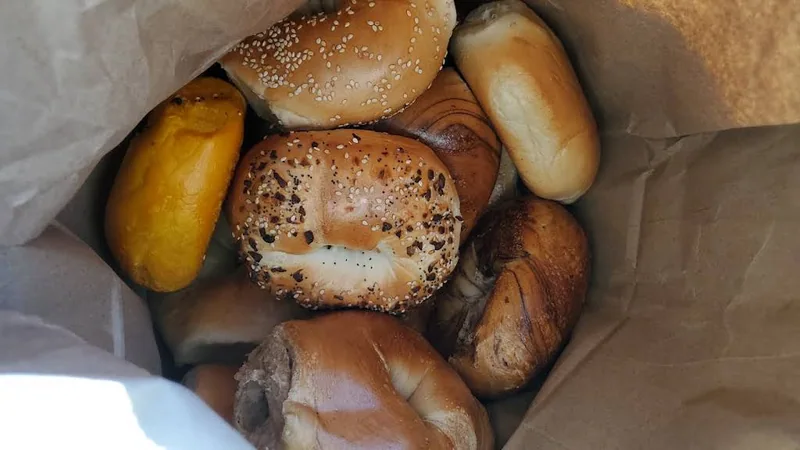
Product photography can help you see the character of a bagel, but it does not tell you how many your household will use. Before requesting a shipment to Wallington, think about the number of people, when you expect to serve the bagels and whether the order is for one occasion or several. If you plan to keep part of the order for later, ask for the handling instructions that apply to the confirmed product. Do not assume a storage method or useful life from appearance alone.
If you are sending bagels to another household, make sure the recipient is expecting food and can receive the shipment. Supply the destination ZIP in the initial enquiry and discuss the requested date. Nationwide shipping is part of OnlineBagel’s offer, but a requested occasion does not guarantee that a shipment can arrive at a particular hour. Agree on the available arrangement before presenting the food as part of a fixed event plan. Recipient details can be handled through the order process rather than posted publicly.
Plan a family or neighborhood breakfast without overordering
Start with the people likely to eat bagels rather than the full invitation list. Some guests may arrive later, have another meal planned or choose different food. Decide whether bagels are the main breakfast or one item among several. Count adults and children in the way that fits your actual gathering rather than applying a blanket assumption about appetite. If the headcount is uncertain, keep a confirmed estimate and a possible-attendance estimate so you can see what is driving the difference.
For a hypothetical example, a gathering has twenty-four invitees, eighteen of whom are expected at breakfast. If the organizer chooses to plan one bagel per breakfast attendee, the initial count is eighteen. Adding a self-selected two-bagel allowance makes twenty. Those numbers are only an illustration of the organizer’s calculation. They are not our minimum, a published package or a serving recommendation. Sharing your own assumptions makes it easier to discuss a quantity that suits the actual occasion.
Separate the bagel order from the venue arrangements
Wallington has public recreation spaces and a borough recreation program. Bergen County identifies Samuel Nelkin County Park in Wallington, and the borough publishes recreation information through its official website. If you are organizing a gathering at a park or another managed venue, check the applicable reservation, food and access rules directly with the venue. Ordering bagels does not grant permission to hold an event, sell food, reserve a space or set up a serving table.
Keep one person responsible for the food and one clear plan for receiving and transporting it after the fulfilment arrangement has been agreed. Ask whether the venue has restrictions that affect your intended setup. If there is no suitable place to store or serve the order, resolve that before purchasing. OnlineBagel does not advertise a park delivery route, event concession or borough partnership on this page. The venue discussion belongs to your event planning; the bagel discussion establishes the actual food order.
Ask useful assortment, slicing and packaging questions
Instead of assuming that a photographed mix is always available, tell us the preferences that matter to your group. You may want a simpler order, a requested variety or an assortment suitable for the way you intend to serve it. List your preferences and identify which are essential and which are flexible. We will discuss the available options for the actual request. A preference submitted through the form does not reserve a particular product or establish its ingredients.
Packaging also deserves a specific question. A family serving at one table may have different needs from a business distributing food between rooms. If you want slicing, separate portions or other preparation, include that request. Ask about spreads and serving items separately rather than assuming that napkins, utensils, cream cheese or platters are included. Clear distinctions let you compare the proposed order with your plan and avoid discovering an unconfirmed expectation when it is time to serve.
Keep ingredient information precise
Ingredient and allergen questions should refer to the product actually being considered. If someone needs to avoid an ingredient, tell us what information you require before confirming the order. A plain appearance, a seed topping or the use of the word bagel does not establish suitability for a dietary requirement. Avoid sending private medical records through the form. A clear product question is enough to begin the discussion and lets us identify what needs to be checked.
When sharing confirmed information with guests or customers, keep the wording within what has been established. Do not turn an ingredient answer into a broader claim about cross-contact, certification or suitability for every person with a similar concern. If the necessary assurance is unavailable, plan an appropriate alternative for that person. For a business buyer, use the confirmed product information when deciding how to describe the item on your own menu rather than copying assumptions from a photograph or another bakery’s listing.
Make the wholesale conversation complete before changing your menu
A recurring wholesale request should cover more than a hoped-for unit price. Explain your intended use, approximate volume, expected ordering frequency and destination ZIP. Ask about the applicable quantities, available product options, pricing and fulfilment. If you need to meet a purchasing requirement, such as a particular invoice format, mention it early. Do not announce a launch date or promise customers a specific assortment before the product and the arrangement have been confirmed.
Think through what happens after the product reaches your business. Identify who checks the quantity, who follows the product handling instructions and who records what is used. If several staff members place orders, choose one person to approve the final request so duplicate instructions do not create confusion. A small business can keep this process simple: one current order record, one responsible contact and one agreed confirmation. A recurring relationship should develop from workable actual orders rather than unsupported promises about future availability.
Send a request that is easy to review
Include your name, contact information, Wallington destination ZIP, order purpose, approximate quantity and requested date. If the date is flexible, say how flexible. For wholesale, add your business name, intended use and expected frequency. Use the message to highlight important product questions or receiving constraints. Leave out card details, bank information, passwords and private access codes. The public form is for starting the conversation, with the actual order details reviewed through the appropriate follow-up.
Before agreeing to proceed, compare the proposed order with your request. Check the product, quantity, total cost, additional charges, timing and fulfilment arrangement. Ask about changes and cancellation terms rather than assuming a rule. If a detail remains unclear, resolve it before treating the order as confirmed. A complete enquiry saves repeated questions, but it is still an enquiry. Your commitment should be based on the confirmed order information, not on a general statement elsewhere on the website.
Order questions
Can a small Wallington business enquire about wholesale?
Yes. Tell us how you plan to use the bagels, your approximate volume, desired frequency and destination ZIP. We will discuss the available products and commercial details for that request rather than assume a published minimum or price.
Can you ship bagels to a Wallington household?
OnlineBagel accepts US shipping enquiries. Provide the destination ZIP and requested date so the available arrangement can be discussed. Timing and the final product are confirmed before the order proceeds.
Are local delivery or pickup available?
This page does not advertise a Wallington pickup counter or a fixed local delivery service. Use the enquiry form to discuss the available fulfilment arrangement for your order.
How do I avoid buying too many for a group?
Count the people likely to eat bagels, decide whether other food is being served and make any extra allowance a deliberate choice. Share your approximate count and assumptions. The examples on this page are planning arithmetic, not pack sizes or order requirements.
Can I request a particular variety or packaging?
Yes, include those preferences in the message. Available varieties, preparation and packaging need to be confirmed for the actual order. Photos do not function as a live availability list.
Is an enquiry a confirmed purchase?
No. The form starts the discussion. Review the confirmed product, quantity, total and fulfilment details before agreeing to an order.
Explore New Jersey ordering areas · Wholesale enquiries · US shipping