
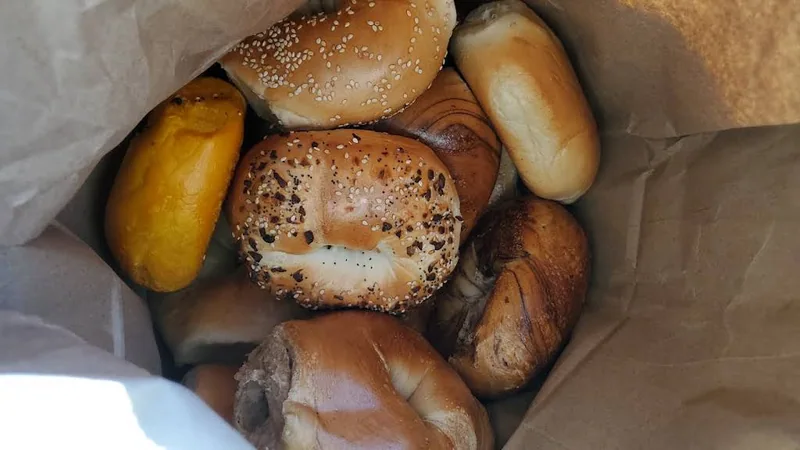
Hand-rolled Jersey bagels for a Paterson breakfast program
A good breakfast bagel program starts with a clear buying decision: what will you serve, how many units do you expect to use, and who will take responsibility for the order? OnlineBagel accepts New Jersey wholesale enquiries for hand-rolled, oven-baked Jersey bagels. For a Paterson café, food counter or workplace kitchen, the next step is a specific quote request that describes your operation. It is not a commitment to an unconfirmed package, delivery route or assortment.
Use this page to prepare that request and evaluate the response. Current varieties, ingredients, packaging, minimum quantities, pricing, timing and fulfilment arrangements must be confirmed for your order. That keeps the discussion tied to the food you actually plan to serve. If you need a shipped order rather than wholesale purchasing, say so in the form so the enquiry follows the right path. A request alone does not reserve stock or create a recurring order.
Choose the job the bagel needs to do
Before calculating a weekly quantity, decide whether the bagel will be sold on its own, offered as part of a breakfast selection, or used in a prepared sandwich. Each use creates different work at the counter. A bagel sold intact may need straightforward packaging and a clear product description. A sandwich program also needs preparation time, filling inventory, equipment capacity and a plan for assembling orders without holding up other customers.
Write one sentence that explains the intended use. For example: “We want to test a weekday breakfast bagel option at our existing café.” That tells the team more than “send wholesale prices.” Include whether you intend to serve the product immediately, toast it to order or hold unopened product for later use. Ask for confirmed product handling instructions instead of assuming that every bagel has the same storage life or preparation requirements.
Avoid building a menu around a variety that has not been confirmed. A photograph can show the character of the bagels without being a complete availability list. Request the current options, then choose an initial mix that fits your service. If your business needs a particular size, ingredient specification or packaging format, describe that requirement before approving a quote. The purpose is to identify a workable match, not to force an unknown product into a fixed menu.
Forecast from transactions rather than optimistic foot traffic
For an existing food business, start with what you already know: breakfast transactions by day, the hours when people buy, and how often a bread-based breakfast item is chosen. Foot traffic alone is not a unit forecast. A person passing the shop is not necessarily a breakfast customer, and a customer buying coffee does not automatically buy a bagel. Keep the first proposal connected to observable behaviour and an amount of stock you can manage responsibly.
If you have no bagel sales history, treat the first order as a measured pilot. Choose a date that resembles an ordinary trading day rather than assuming a special event represents normal demand. Record units received, units offered, units sold and units left over. Also record stockouts. Selling every unit by the first hour can hide unmet demand; finishing with a large unsold quantity can signal that the quantity, presentation or offer needs adjustment.
Separate an availability issue from a demand issue. If the product was not displayed or staff did not know it was available, weak sales do not necessarily establish weak customer interest. Conversely, one enthusiastic morning does not justify a permanent jump in purchasing. Compare several comparable service periods before proposing a routine quantity. The quote request can describe a pilot and a possible future frequency without promising a standing order.
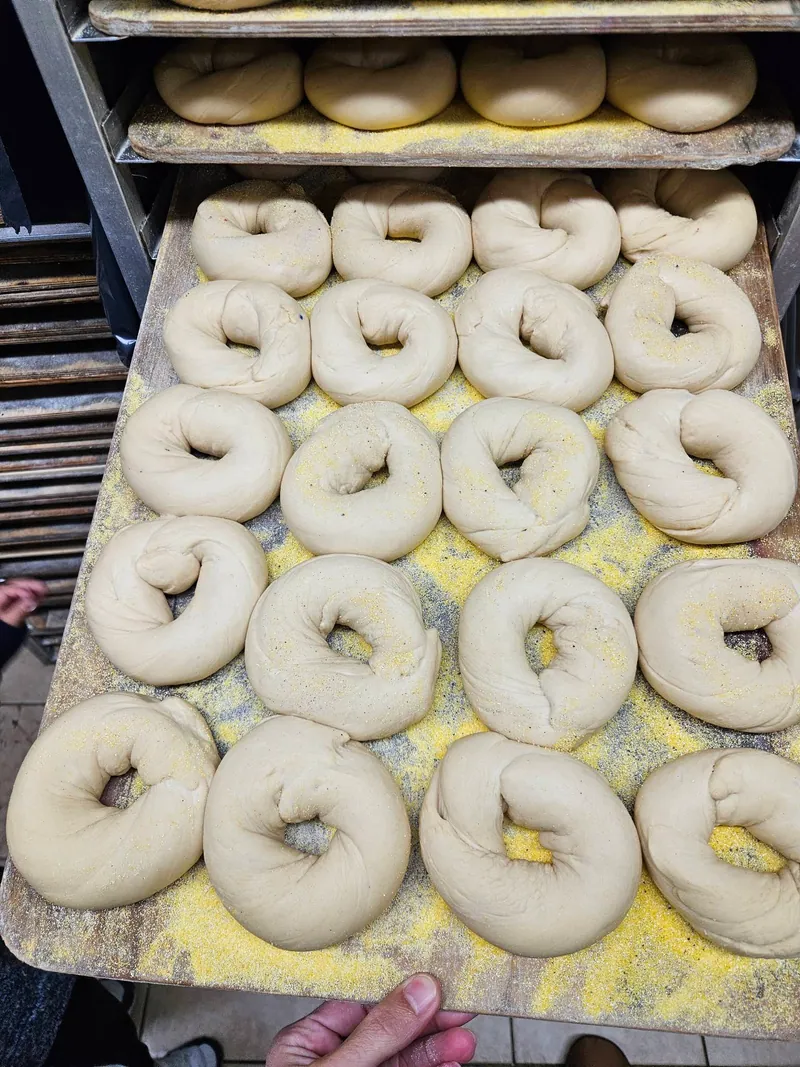
A worked quantity example for a café pilot
Consider a planning example with 60 breakfast transactions on a comparable weekday. If the buyer chooses a trial assumption that one quarter of those transactions might include a bagel, the initial working demand is 15 units. That assumption is a choice for the example, not a claim about Paterson customers or a guaranteed conversion rate. If the buyer also has three confirmed staff portions to include, the proposed requirement becomes 18 units before any approved contingency.
The next question is whether an order of that size is available and commercially sensible. Ask about the actual minimum, unit packaging and order increments. Do not quietly round a forecast upward simply because a larger number sounds more professional. If the confirmed purchase quantity differs from the forecast, decide how the additional units will be used within the product’s confirmed handling guidance. Do not count on indefinite storage or an unverified freezing and reheating routine.
After service, suppose 14 units were sold, three went to the planned staff portions and one remained. Track those outcomes separately. A sales report should not count staff use as customer demand. The next request can then distinguish resale units from internal consumption. That simple separation produces a much more useful wholesale conversation than reporting that almost everything was used.
Map preparation before you promise speed
An appealing breakfast menu still needs a workable station. List the steps that happen between receiving a bagel and handing a finished item to a customer. Depending on your own menu, those steps may include checking the order, opening packaging, slicing, toasting, adding fillings, wrapping and taking payment. The bagel enquiry should identify any preparation requirement you need confirmed, such as whether slicing is available or whether the product arrives ready for your chosen process.
Run a small internal workflow check before advertising a service promise. Ask whether your toaster, counter space and staffing can handle several orders arriving together. A customer-facing promise about speed belongs to your operation and should reflect your actual capacity. Buying bagels does not establish a complete catering service, a guaranteed turnaround time or an approved food preparation procedure.
Keep ready-to-eat food protected while staff handle payments and other tasks. Use your business’s established food safety procedures and the applicable product instructions. If you add perishable fillings or spreads, those ingredients bring their own storage and service requirements. Request ingredient information for the bagel, and obtain the corresponding information for the other components from their providers. The final menu description should represent the complete item you sell.
Compare the quote using a complete purchasing sheet
A useful price comparison starts with the same specifications. Record the confirmed quantity, product options, packaging format, any approved preparation, fulfilment method and any additional charges. A unit price without those details may describe a different order from the one your business needs. Ask whether the quote is for a single purchase or an agreed recurring arrangement, and keep a copy of the terms you actually approve.
For resale planning, your own selling price must cover more than the bagel purchase. Depending on the item, consider fillings, paper goods, labour, transaction costs and waste. Work from your actual costs rather than an advertised percentage margin. OnlineBagel does not need to publish an invented wholesale saving for you to make a disciplined decision. A clear quote gives you the inputs needed to assess whether the offer fits your operation.
Do not publish a menu price based on a preliminary enquiry. Confirm the product and purchasing terms first, then complete your own costing. If you need a sample or trial before deciding, request that explicitly; availability and terms must be confirmed. The enquiry form is a way to describe the decision you are trying to make, including the information still needed to make it.
Ingredient information belongs before menu approval
Ask for current ingredient and allergen information for the exact product options under consideration. Bagels can contain or come into contact with ingredients that matter to your customers, and appearance alone is not enough to establish a product’s composition. Sesame is recognised by the FDA as a major food allergen. Do not assume a bagel is suitable for a particular allergy because the topping is absent from the photograph.
If a customer asks about a dietary restriction, use the confirmed information and explain the limits of what your operation can establish. Do not infer kosher, halal, vegan or gluten-free status from the town where a product is sold, its name or a visual impression. Certification and dietary claims need their own evidence. Where a requirement cannot be met or verified, say so before an order is approved.
Your finished item may include more ingredients than the bagel itself. A breakfast sandwich, spread or garnish can change the relevant information. Keep a written reference for staff so a busy service does not turn an uncertain answer into a promise. For an event or group buyer, collect requirements early enough to establish what can actually be offered; the form should not invite guests to rely on an unconfirmed accommodation.
Receiving in Paterson: specify the actual handoff
Paterson’s commercial settings include downtown and neighbourhood corridors. That does not mean every address has the same access, receiving hours or staffing. In your request, provide the city and ZIP, the type of premises, the desired date and any relevant receiving constraints. An exact street address can be confirmed through the order conversation when a fulfilment arrangement is being established; it does not need to appear publicly on a page.
If your business uses a shared entrance, has stairs or has limited receiving hours, flag those details. Name the person authorised to accept an order and identify a substitute if that person is unavailable. Confirm the actual fulfilment method and timing before planning staff coverage. This page does not advertise a Paterson storefront, pickup point, scheduled local delivery route or same-day service.
At receipt, check the quantity and approved specifications against the order record. Keep packaging or order information needed to identify what was supplied. If something differs, document it promptly through the agreed contact channel rather than making an assumption about substitutions. A reliable receiving routine is particularly useful when the person who places the order is not the person opening the business that morning.
Create a repeat order without losing control
Once a pilot works, define the next purchasing decision. A repeating calendar reminder is useful, but it is not the same as an approved subscription or standing supply agreement. State the frequency you would like to discuss and ask how future quantities, changes and confirmations would work. Until a recurring arrangement is actually agreed, treat each request as a request that still needs confirmation.
Maintain a compact order record: planned date, approved quantity, product mix, packaging, price, fulfilment details and the name of the approving buyer. Add actual sold units and leftovers after service. Review the record before the next request so the quantity reflects what happened rather than what someone remembers. Holidays, closures and changed opening hours should trigger a fresh check instead of an automatic repeat.
Give staff a clear rule for substitutions and changes. If only the owner can approve a different product mix, record that. If a manager can adjust quantities within an agreed range, record that too. These are your internal purchasing controls; they do not imply that OnlineBagel currently offers any particular ordering technology or automatic replenishment service.
Send a request that can receive a useful answer
Use the form below to explain your Paterson business or group, the intended use and the date you are considering. A proposed unit count is helpful even if it is provisional. Add whether you are comparing a one-time wholesale purchase, a possible repeat program or a shipped order. If the decision depends on a particular ingredient, packaging need or preparation option, state that plainly instead of leaving it until the final approval.
A strong request might say: “We operate a Paterson café and want to assess a weekday breakfast bagel pilot. Our proposed first requirement is 18 units, subject to your minimum and availability. Please confirm current options, ingredients, packaging, pricing and fulfilment arrangements.” This is an example of a useful brief, not a published package or an indication that 18 units is an accepted minimum.
After receiving a response, check that the unresolved questions have been answered before committing. Confirm the order details in writing and keep the approved version accessible to the receiver. Hand-rolled, oven-baked Jersey bagels give the program its product focus; careful forecasting, accurate specifications and a clear handoff make it a purchasing plan your business can actually use.
Keep the pilot measurable
Choose one person to collect the results of the first service. A short record of received units, sales, staff use and leftovers makes the next conversation specific. It also helps separate product purchasing from the separate work of pricing and running your own breakfast menu.
Order questions
Is there a local OnlineBagel shop or pickup point here?
This page does not advertise a local storefront or pickup point. Ask about the fulfilment options available for your proposed order.
What is the wholesale minimum and lead time?
Request confirmation for your quantity and date. No fixed minimum, price or lead time is published here.
Can I choose specific varieties?
Request the current available options and ingredient information before confirming a mix.
Explore New Jersey ordering areas · Wholesale enquiries · US shipping